Goat Hoof Trimming: How to Trim Goat Hooves Step by Step
Quick answer
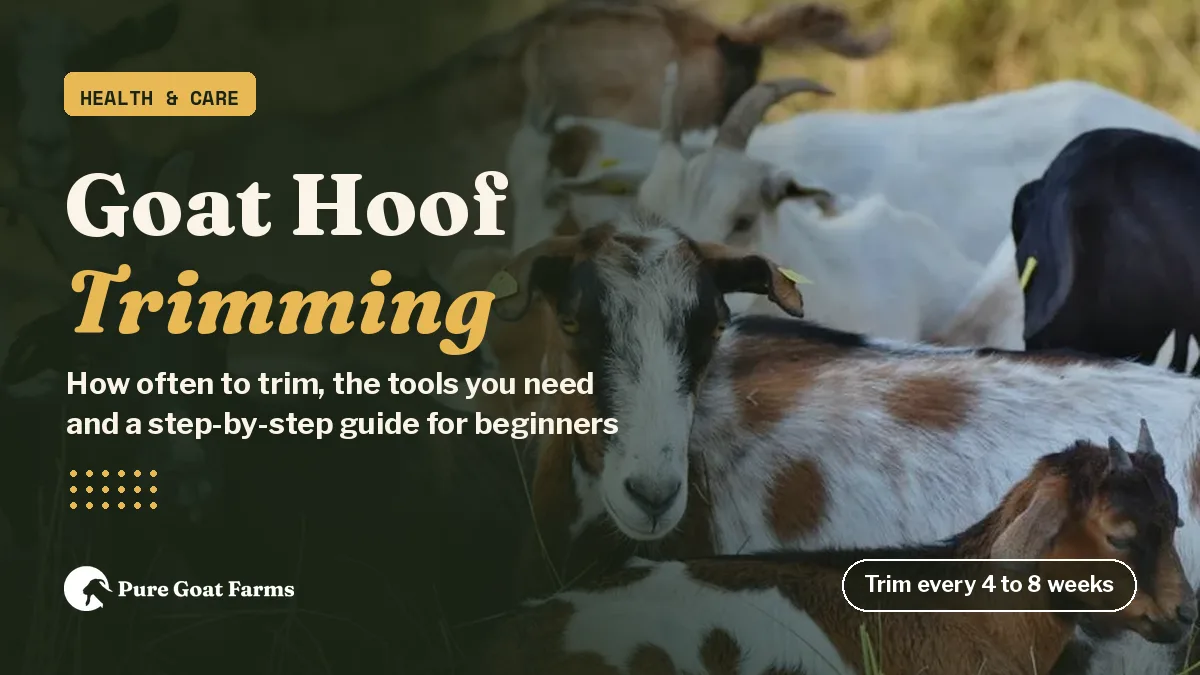
Most goats need their hooves trimmed about every 4 to 8 weeks, depending on breed, diet, terrain and season. Secure the goat on a stand or against a wall, clean the hoof, then snip the overgrown hoof wall down until it is level with the sole, trim the heels and toe so the hoof sits flat, and stop as soon as the sole turns pink. All you really need is a sharp pair of hoof shears, a hoof pick and a calm, well-restrained goat.
Goat hoof trimming is one of those chores that looks intimidating the first time and becomes routine by the third. Goats evolved on rocky, dry ground that wore their hooves down naturally. On soft pasture, bedding and grass, the hoof wall keeps growing, folds over the sole, traps mud and manure, and eventually changes the way the goat stands and walks. Regular trims prevent all of that.
In this guide we cover why trimming matters, how often to do it, the tools that make it easier, a step-by-step walkthrough, how to handle overgrown hooves, and the warning signs that mean it is time to call a vet. Whether you keep two Nigerian Dwarf wethers or a string of milking does, the process is the same.
Why Goat Hoof Trimming Matters
A goat's hoof is made of a hard outer wall, a softer sole underneath, and a heel at the back. In a healthy hoof the wall and sole sit at roughly the same level, so the goat's weight is spread evenly across the bottom of the foot. When the wall grows long, it curls under the sole or forward at the toe. That creates pockets that hold moisture and dirt, which is exactly the environment the bacteria behind hoof scald and foot rot thrive in.
Long hooves also change posture. A goat with overgrown toes rocks back onto their heels, which strains the tendons and joints of the lower leg. Over months, that can lead to lameness and even permanent changes in how the leg is set. A sore goat moves less, grazes less and, in a dairy doe, may give less milk. Good hoof care is part of the same picture as good feeding and parasite control, and it is one of the habits we list in our guide to how long goats live for a reason.
Finally, trimming day is a built-in health check. When you handle every foot on a schedule, you notice heat, swelling, odor, limping or a new lump long before it becomes an emergency.
How Often Should You Trim Goat Hooves?
There is no single calendar that fits every herd, but most keepers land somewhere between every 4 and 8 weeks. The better rule is to trim when the hoof needs it: when the wall starts folding over the sole, the toes look pointed or upturned, or the goat no longer stands squarely.
| Situation | Typical trimming interval | Why |
|---|---|---|
| Goats on soft pasture or deep bedding | Every 4 to 6 weeks | Little natural wear, so the wall grows long quickly |
| Goats with rocks, gravel or concrete to climb | Every 6 to 10 weeks | Hard surfaces wear the hoof down naturally |
| Wet spring and fall seasons | Check every 2 to 4 weeks | Moist, soft hooves are prone to scald and rot |
| Kids | First light trim around 1 to 3 months, then as needed | Early handling makes adult trims far easier |
| Late-pregnant does | Trim a few weeks before kidding, gently | Avoid stress and awkward positions near delivery |
Diet plays a part too. Rich feed and a lot of grain can speed hoof growth and, in some goats, contribute to laminitis (inflammation inside the hoof). Balancing hay, browse and concentrate, as we explain in what goats eat, keeps hooves growing at a steadier, healthier rate. Our goat feed calculator can help you size daily rations so you are not overfeeding grain.
One practical tip: tie hoof trims to something you already do on a schedule, such as body condition scoring or FAMACHA eye checks, so it never slides off the to-do list.
Tools You Need for Goat Hoof Trimming
You do not need a farrier's truck. A small, dedicated kit covers almost everything:
- Hoof trimming shears. The single most important tool. Look for short, sharp blades with a spring that opens the jaws for you and a lock that keeps them closed in your pocket. Dedicated goat trimmers are better than garden pruners because the blades are shaped for the hoof wall and less likely to slip.
- A hoof pick or stiff brush. For scraping out packed mud and manure so you can actually see what you are cutting.
- A hoof rasp or file (optional). Handy for smoothing ragged edges and leveling the bottom after the shears.
- A stand or stanchion. A milking stand with a headgate and a feed tray holds the goat at a comfortable working height and keeps them busy eating while you work.
- Gloves. Protect your hands from the blades and from whatever is in that hoof.
- Blood-stop powder and a hoof treatment spray. For the occasional nick or for hooves that show signs of scald or rot.
Whatever shears you choose, keep them clean and sharp. Dull blades crush rather than cut, which makes the job slower and the goat more fidgety. Wipe the blades with disinfectant between goats, especially if any animal in the herd has a foot problem.
How to Trim Goat Hooves Step by Step
Here is the routine we follow for a normal maintenance trim. Take your time on the first few goats; speed comes with practice.
1. Secure and settle the goat
Put the goat on a stand with their head in the stanchion and a small handful of feed in the tray. If you do not have a stand, tie the goat short to a fence and press their side against a wall with your body. A calm goat is a safe goat. Many keepers find trimming easiest when the ground is dry and hooves are slightly softened, for example the morning after rain or after the goats have walked through dewy grass. Very dry hooves can be hard as stone.
2. Pick up the foot the right way
For a front foot, stand facing the goat's tail, run your hand down the leg and bend it at the knee, holding the foot up and back. For a hind foot, stand beside the goat facing backward and lift the leg back behind them, the way a farrier holds a horse's hoof. Never pull a leg out to the side; goats' joints are not built for that, and they will fight you.
3. Clean the hoof
Use the hoof pick or the tip of your shears to scrape out mud, manure and bedding from under the folded wall and between the two toes. You cannot trim accurately until you can see the sole.
4. Trim the hoof wall
Cut away the wall that has grown past or folded over the sole, working from heel to toe along each side of each toe. Take thin slices rather than big bites. The goal is for the wall to sit level with, or just a hair above, the sole.
5. Level the heel and toe
Trim the toe back so it no longer points forward or curls up, then take a little off the heel if it is taller than the rest of the hoof. When you are done, the bottom of the hoof should be flat and roughly parallel to the coronary band (the hairline at the top of the hoof). Look at the hoof from the side and from behind: both toes should be the same length and the foot should sit squarely.
6. Know when to stop
This is the part new keepers worry about most. As you shave the sole, it changes from white or chalky to a softer, pinkish color. Pink means blood vessels are close. Stop there. If you nick it and it bleeds a little, apply blood-stop powder or firm pressure, keep the goat on clean, dry bedding, and watch the foot for a few days. Small nicks happen to everyone and usually heal well.
7. Smooth, check and reward
Use a rasp to tidy rough edges if you like. Set the foot down and check how the goat stands. Then move on to the next foot, and finish with a treat and a scratch so the goat remembers trimming day as something tolerable.
Trimming Overgrown Goat Hooves
If you have rescued goats or just bought animals whose feet have been ignored, you may find hooves that curl like elf shoes, toes that bend upward, or walls folded completely over the sole. Do not try to fix all of that in one session.
- Work in stages. Take off a modest amount each time and come back every 2 to 3 weeks. Badly overgrown hooves often have blood supply that has grown down farther than normal, so the pink sole can appear sooner than you expect.
- Remove the obvious excess first. Cut off the curled toe tip and folded wall, then level the bottom a little at a time.
- Expect gradual change. Leg posture that has adapted to long hooves needs time to readjust. Each trim should bring the hoof closer to a normal shape.
- Ask for help. A vet, an experienced goat mentor or a livestock hoof trimmer can show you how far to go on a severe case. Watching someone else do the first trim on a difficult foot is worth a lot.
Common Hoof Problems to Watch For
Trimming lets you catch these early. If you see any of them, talk to your vet about treatment, since products and doses depend on the situation.
Hoof scald
Red, raw, irritated skin between the toes, often in wet weather. It can be an early stage on the way to foot rot. Keeping goats on dry ground and treating the area promptly matters.
Foot rot
A contagious bacterial infection with a strong, distinctive foul smell, separation of the hoof wall and lameness. It spreads through contaminated ground, so infected goats should be separated and the area managed. Your vet can guide trimming, topical treatment, footbaths and whether antibiotics are needed.
Hoof abscess
A sudden, severe limp in one foot, sometimes with heat or swelling. Abscesses need to drain, and a vet can locate and open them safely.
Laminitis (founder)
Inflammation inside the hoof, often linked to grain overload, rich feed or illness. Goats may stand stiffly, walk on their knees or shift weight. Long term it can cause abnormal, fast-growing hooves. This needs veterinary attention and usually a diet change.
Mineral-related hoof issues
Poor hoof quality can be one sign of a mineral imbalance. Free-choice loose goat minerals formulated for your region are a basic part of hoof health, and your vet can help if you suspect a deficiency.
Always read product labels, follow your vet's advice, and check withdrawal times on anything you use on a milking doe.
Tips for Trimming Different Kinds of Goats
Kids
Start handling feet early, even before kids need a real trim. Pick up each foot, hold it for a few seconds, and let it go. That gentle practice makes adult goat hoof trimming much easier for both of you.
Milking does
Trimming right after milking works well because does are already on the stand and used to the routine. If you milk twice a day, as we explain in how often to milk a goat, you have two natural opportunities every day to check a foot or two.
Bucks
Bucks are strong and, during the rut, smelly and distracted. Trim them outside of breeding season when possible, use a stand or a solid tie, and consider having a helper hold the head.
Pregnant does
Aim to trim a few weeks before kidding, keep sessions short and avoid tipping heavily pregnant does into awkward positions. Getting the job done ahead of time means she goes into kidding on sound feet.
Should You Trim Yourself or Hire Someone?
Most goat keepers learn to trim their own goats, and we think it is a skill worth having. Trimming every few weeks is far cheaper and easier to schedule yourself than paying for a visit each time. Professional hoof trimmers and vets typically charge per goat or per farm call, and prices vary a lot by region.
That said, there is no shame in getting help. A professional is the right call for severely overgrown or deformed hooves, any foot that smells foul or bleeds without being cut, sudden lameness, and goats that are too large or strong for you to handle safely. Many keepers book one session with an experienced trimmer and simply watch and ask questions; it is the fastest way to build confidence.
Final Thoughts
Goat hoof trimming comes down to a few simple habits: check feet every few weeks, keep your shears sharp, take thin slices, stop at pink, and make the goat as comfortable as you can. A good stand and a quality pair of trimmers turn a wrestling match into a calm, ten-minute job. Pair regular trims with dry ground, sensible feeding and loose minerals, and your goats will stand squarely, move easily and stay productive for years. When something looks wrong, such as a bad smell, heat, swelling or a goat that will not bear weight, call your vet sooner rather than later.
FAQs
Do all goats need their hooves trimmed?
Almost all domestic goats need regular trims. Goats kept on soft pasture or bedding get little natural wear, so the hoof wall overgrows. Goats with lots of rock or concrete to climb may need trimming less often, but their feet should still be checked every few weeks.
How often should goat hooves be trimmed?
Most goats need trimming every 4 to 8 weeks. Trim when the hoof wall starts folding over the sole, the toes look long or pointed, or the goat no longer stands squarely. Check more often in wet seasons.
How much does it cost to have a goat's hooves trimmed?
Prices vary widely by region. Professional trimmers and vets usually charge per goat, sometimes with a farm call fee. Because goats need trims every few weeks, most keepers learn to do it themselves and save professional help for difficult or overgrown feet.
What happens if you don't trim goat hooves?
Overgrown hooves curl over the sole, trap mud and manure, and raise the risk of hoof scald and foot rot. They also force the goat onto their heels, straining tendons and joints, which can lead to lameness and lasting changes to the legs.
What should I do if I cut too deep and the hoof bleeds?
Apply blood-stop powder or firm pressure until the bleeding stops, keep the goat on clean, dry bedding and watch the foot for heat, swelling or limping over the next few days. Contact your vet if bleeding will not stop or the goat stays lame.
My goat is limping. What should I do?
Check the foot for overgrowth, packed debris, a foul smell, heat or swelling, and look between the toes for red, raw skin. Limping can come from foot rot, scald, an abscess, laminitis or an injury, so call a vet who treats goats if it does not improve quickly or the goat will not bear weight.

We're a family-run dairy-goat farm with 27 goats across six breeds. Every guide is tested on our own herd before it's published. More about us.